Pods
Learn how Pods get IP addresses, communicate directly, and form the base unit of Kubernetes networking.
Read Pods guide →
Learn Kubernetes networking step by step with focused resources on Pod communication, Services, DNS, CNI, kube-proxy, Ingress, traffic flow, and network security.
This page is designed as a premium Kubernetes hub, so users can understand the overall cluster architecture first, then move into individual topics like Pods, Services, DNS, Ingress, and Network Policies with a much clearer learning path.
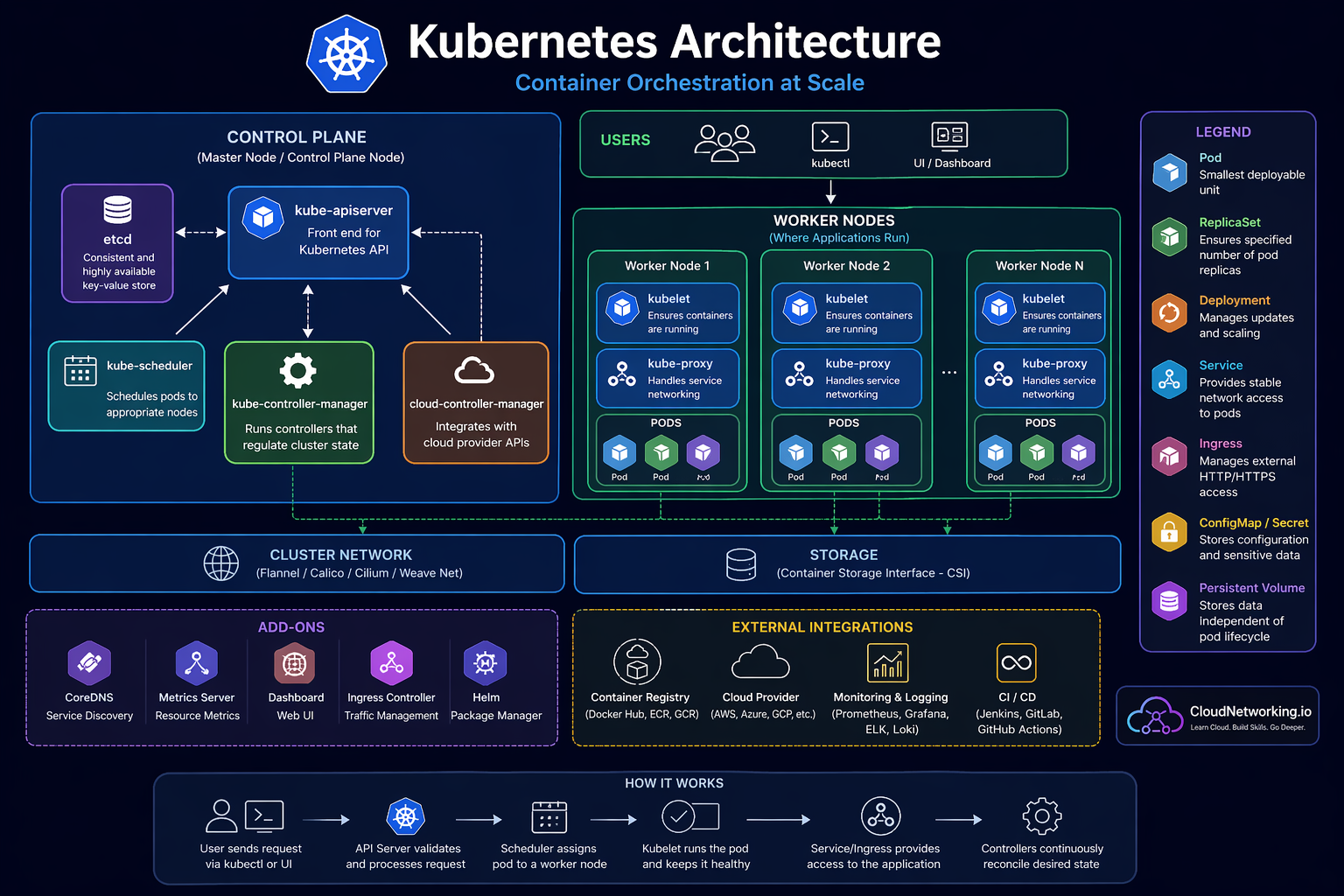
This visual reference helps users understand how Kubernetes works as a complete system — from users and control plane components to worker nodes, Pods, networking, storage, add-ons, and external integrations.
High-level Kubernetes architecture for learning, design understanding, and cluster operations.
These videos help users understand Kubernetes architecture, components, traffic flow, and cluster behavior through guided explanations.
Start with the building blocks that define how workloads communicate inside a Kubernetes cluster.
Learn how Pods get IP addresses, communicate directly, and form the base unit of Kubernetes networking.
Read Pods guide →Understand ClusterIP, NodePort, and LoadBalancer Services and how stable service access works.
Read Services guide →Learn what the Container Network Interface does and how Kubernetes networking plugins connect Pods.
Read CNI guide →Understand how kube-proxy supports Service networking and traffic forwarding inside the cluster.
Read kube-proxy guide →See how Kubernetes DNS helps Pods and Services discover each other using names instead of IP addresses.
Read DNS guide →Understand how Pods, Services, DNS, kube-proxy, CNI, Ingress, and Network Policies fit together.
You are hereLearn how Kubernetes routes traffic between Pods and Services, and how internal discovery works.
Understand how Services provide stable access to ephemeral Pods and make application traffic predictable.
Read Services guide →Learn how service discovery works so applications can reach Services by name instead of changing IP addresses.
Read DNS guide →See how service traffic is forwarded and load-balanced to backend Pods inside the cluster.
Read kube-proxy guide →Understand how external users reach Kubernetes applications and how HTTP or HTTPS routing works.
Learn the basics of Kubernetes Ingress, host-based routing, path-based routing, and controller behavior.
Read Ingress guide →See how Ingress depends on Services to route external requests into application backends.
Read Services guide →Understand how service names and external DNS both matter when exposing Kubernetes applications.
Read DNS guide →Go deeper into traffic control, zero-trust communication, and workload isolation in Kubernetes.
Learn how Kubernetes Network Policies control allowed traffic between Pods and namespaces.
Read Network Policies guide →Understand why Pod-level communication is the foundation for security policy design inside the cluster.
Read Pods guide →See how CNI plugins play a role in implementing Kubernetes networking and policy behavior.
Read CNI guide →Learn how to diagnose networking issues inside Kubernetes and improve visibility into traffic paths.
Start here when a Service name does not resolve correctly or internal application discovery breaks.
Read DNS guide →Use the Services and kube-proxy topics together to diagnose failed traffic between Pods and Services.
Read Services guide →Use Ingress, Services, DNS, and Network Policies together to trace where traffic is failing.
Read Ingress guide →After learning core Kubernetes networking, move into cloud-specific managed-cluster networking models.
Build from Kubernetes networking basics into Amazon EKS VPC integration, Pod IP assignment, and AWS service exposure.
Explore AWS section →Use this Kubernetes hub as the base before moving into Azure Kubernetes Service networking patterns.
Explore Azure section →Understand core cluster networking here first, then move into Google Kubernetes Engine networking design.
Explore GCP section →